
Hey mama! Congrats on your sweet baby. I hope these early days (or weeks, or months) are filled with snuggles, slow mornings, and a whole lot of grace for yourself.
If you're reading this, you probably had a C-section — whether it was planned, unplanned, your first, or your fifth — and you're starting to wonder: what can I actually DO to feel like myself again?
Trust me, mama, I get it. As a pelvic floor physical therapist (and a mom of two), I know the desire to move, breathe, and reconnect to your body is real. But you also probably have a lot of questions:
What's safe to do — and what should I avoid?
Will my core ever feel "normal" again?
What about that C-section pouch?
Take a deep breath. I've got you.
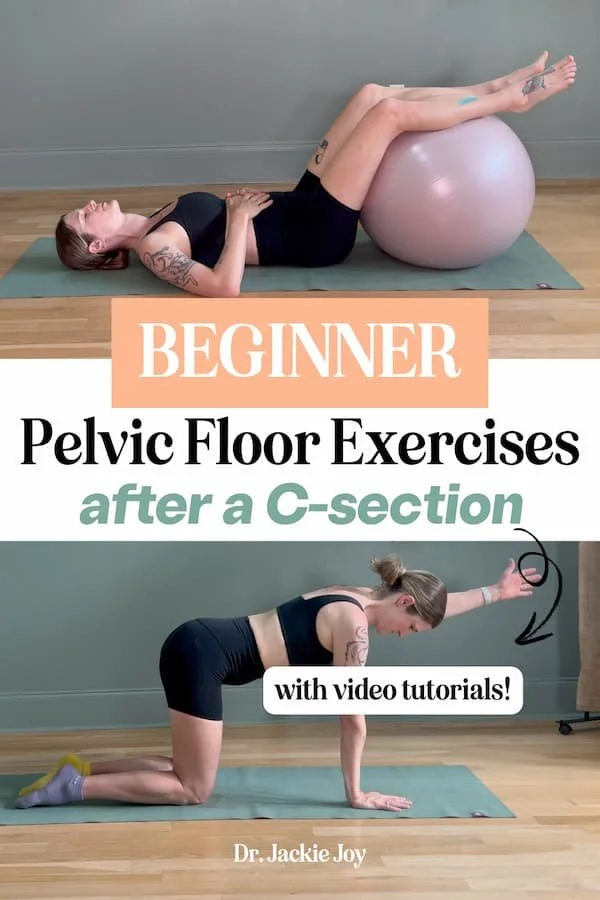
In this guide, I'm walking you through the best pelvic floor exercises after C-section — including breathing, pelvic floor, and core work you can safely do at home. Each exercise comes with a short video demo so you can follow along, no guesswork required.
Let's dig in.
Pin me for later ⤵️
Why Your Pelvic Floor Still Needs Care After a C-Section
Here's something I wish more C-section mamas heard from day one: just because your baby didn't pass through the birth canal doesn't mean your pelvic floor wasn't impacted.
Your body went through 9+ months of pregnancy. Your pelvic floor stretched, your hormones shifted, your core muscles lengthened to make room for that beautiful baby. And then — major abdominal surgery happened. Seven layers of tissue were cut through to safely deliver your baby.
That deserves real recovery. Not just clearance at your 6-week checkup and a "you're good to go!"
(If you want to go deeper on this, I have a whole post on pelvic floor therapy after C-section — definitely give it a read when you have a few quiet minutes.)
For now, let's focus on what you can DO.
When Can You Start Exercising After a C-Section?
This is one of the most common questions I get from C-section mamas — and I'm going to give you a clearer answer than the typical "wait until your 6-week checkup."
The truth is, there's a lot you can safely do before that 6-week visit. Here's how I break it down:
Days 1–14 postpartum: Focus on rest, gentle walking, posture, and reconnecting through breath. This is the time to be still, hydrate, and let your body begin its healing work.
Weeks 2–6 postpartum: You can begin gentle pelvic floor and core reactivation exercises (the ones I'll walk you through below). The goal here isn't to "get back" anywhere — it's to wake up the deep core system that's been on a long pause.
Weeks 6+ postpartum: After your medical clearance, you can start progressing to slightly more dynamic exercises — but please don't take that "all clear" as permission to jump back into your pre-baby workouts. Your tissues are still healing well beyond 6 weeks.
A quick note: every body is different. If something feels off — pain, pressure, heaviness, leaking, or that "doming" along your midline — back off and check in with a pelvic floor PT. No exercise is worth pushing through.
Pelvic Floor Exercises After C-Section: Where to Begin
Before we dive into specific exercises, I want you to remember something important — your "core" is so much more than your abs.
It's a beautifully connected system that includes:
Your diaphragm (top)
Your pelvic floor (bottom)
Your deep abdominal muscles (front and sides)
Your spinal stabilizers (back)
When we exercise post-C-section, we're not chasing flat abs or "bouncing back." We're rebuilding this entire system from the ground up — gently, intentionally, and with breath at the center of it all.
Speaking of breath…
Breathing: The Foundation of C-Section Recovery
If you only do ONE thing after your C-section, let it be this. Diaphragmatic breathing is the single most important exercise to start with — even on day one postpartum.
Why? Because proper breath work:
Reconnects you to your deep core
Reduces tension in your healing abdominal tissue
Activates your pelvic floor muscles naturally
Calms your nervous system (so important during early postpartum)
Diaphragmatic Breathing (Belly Breathing)
Here's how to do it:
Lie on your back with your knees bent and feet flat on the floor (or sit up if lying down feels uncomfortable on your incision).
Place one hand on your chest and one on your belly.
Inhale slowly through your nose, allowing your ribcage to expand 360 degrees and your belly to softly rise.
Exhale gently through pursed lips — like you're fogging up a mirror — and feel your belly soften back down.
Repeat for 5–10 breaths, multiple times a day.
You can do this while feeding your baby, lying in bed, or even waiting in the school pickup line. There's no wrong time.
Pelvic Floor Exercises After C-Section
Once you've built a foundation with breath, you can layer in gentle pelvic floor connection work. Even though your baby didn't come through the vaginal canal, your pelvic floor still needs love.
Connection Breath with Pelvic Floor Engagement
This is essentially diaphragmatic breathing with a small (and intentional) pelvic floor lift on the exhale.
Start on all fours in a tabletop position: shoulders over wrists, hips over knees.
Inhale into your rib cage, allowing expansion through your sides and back.
Exhale as you gently draw your belly up and in, pulling your pubic bone toward your belly button. At the same time, lift your pelvic floor—imagine a gentle upward squeeze from the sit bones. Use a soft sound like “shhh” as you exhale to help activate your deep abdominals.
Inhale to release and expand again. Continue for several breath cycles, focusing on control and connection between breath, core, and pelvic floor.
The key here? Both the lift AND the release matter equally. Postpartum pelvic floors often default to gripping and holding, which doesn't help us heal. We want strength AND relaxation.
Core Exercises After C-Section
Now we're getting into the deeper core work — but I want to be really clear: these aren't "ab" exercises in the traditional sense. We're not doing crunches or sit-ups just yet (more on what to avoid in a minute).
These core exercises after C-section are designed to safely reconnect your deep abdominal muscles, especially the transverse abdominis — the muscle that wraps around your torso like a corset and supports your spine, pelvic floor, and (yes, mama) your C-section scar.
Heel Slides
A safe, gentle way to wake up your deep core after C-section.
Lie on your back with knees bent.
Inhale to prepare, expanding into your ribs and belly.
On the exhale, slowly slide one heel away from your body until your leg is straight (or as far as feels comfortable).
Inhale and slide the heel back to the starting position.
Alternate sides for 8–10 reps per leg.
Keep your low back gently connected to the floor — not pressed flat, but supported.
Supine Marches
Once heel slides feel easy, marches are a great progression.
Lie on your back with knees bent and feet flat.
Inhale to prepare.
On the exhale, slowly lift one knee toward your chest (keeping the knee bent at 90 degrees).
Inhale and lower it back down.
Alternate sides, focusing on keeping your pelvis stable (no rocking side to side).
If you feel any doming or coning in your belly during this exercise, back off and stick with breath work and heel slides for now.
Glute Bridges
Once you're feeling strong with the earlier exercises (usually around 4–6 weeks postpartum), you can add bridges to your routine.
Lie on your back with knees bent and feet flat, hip-width apart.
Inhale to prepare.
On the exhale, press through your heels and lift your hips toward the ceiling.
At the top, gently squeeze your glutes and engage your pelvic floor.
Inhale and slowly lower back down.
Aim for 8–12 reps.
Bridges are amazing because they activate your glutes AND your deep core — both of which tend to need extra love postpartum.
Exercises for the C-Section Pouch
Let's talk about it, mama — the C-section pouch (sometimes called the C-section shelf or "mommy tummy"). I see how much emotional weight this carries for so many women, and I want to address it with both honesty and grace.
First, a few things to know:
The C-section pouch isn't just extra fat — it's often a combination of weakened abdominal muscles, scar tissue restrictions, and (in many cases) diastasis recti. So no amount of crunches or "burning belly fat" will fully fix it. What WILL help is rebuilding deep core strength and addressing the scar tissue itself.
The exercises I've already walked you through (breath work, heel slides, marches, bridges) are all foundational for healing the C-section pouch. As you progress, you can layer in more targeted work.
Transverse Abdominis Activation (TVA Engagement)
This deep core activation is one of my favorite exercises for the C-section pouch.
Lie on your back with knees bent and feet flat.
Place your fingertips just inside your hip bones.
Inhale and let your belly rise.
On the exhale, gently draw your hip bones toward each other (like you're zipping up a tight pair of jeans) — you should feel your TVA muscle gently firm up under your fingertips.
Hold for 3–5 seconds, then release.
Repeat 8–10 times.
Two more things that make a huge difference for the C-section pouch:
Scar mobilization — once your incision is fully healed (usually around 6–8 weeks), gentle scar massage can reduce adhesions and improve tissue mobility. This is something a pelvic floor PT can teach you in person, or you can find guidance in my Postpartum Kickstart program.
Posture and core engagement during daily life — how you stand, lift your baby, and even feed at 3 AM all impact your healing. Small shifts add up.
What to Avoid in C-Section Recovery
Here's what I recommend AVOIDING in the early months postpartum (especially before 12 weeks):
Crunches, sit-ups, and traditional ab exercises (until after you have rebuilt your core foundation)
Planks or push-ups before your core is ready
Heavy lifting (anything heavier than your baby in the first 6 weeks)
High-impact activities like running, jumping, or HIIT
Anything that causes pain, doming, or pelvic pressure
It's not forever, mama. It won't always be this way. But your tissues need time to heal — and rushing the process can lead to setbacks like prolapse, persistent diastasis, or incontinence down the road.
Signs You Need a Pelvic Floor PT
If you're experiencing any of the following, please don't tough it out — reach out to a pelvic floor PT:
Urinary or fecal leaking
Pelvic heaviness or a "falling out" sensation
Persistent low back, hip, or tailbone pain
Pain or numbness around your C-section scar
Diastasis recti that isn't improving with home exercises
These are common, but they're not "normal" — and they're highly treatable with the right care.
Frequently Asked Questions
When can I start exercising after a c-section?
You can begin gentle breath work and pelvic floor connection exercises within the first few days postpartum (yes, really!). More structured core exercises typically begin around 2–6 weeks, with a gradual progression after your 6-week clearance.
Are kegels safe after a c-section?
Yes — but Kegels alone aren't enough. Pair them with diaphragmatic breathing and full pelvic floor relaxation between contractions for the best results.
Can I do crunches after a c-section?
I don't recommend traditional crunches in the first several months postpartum until after you have rebuilt your foundational core strength. If you’re looking for postpartum core excercises you can start before 6 weeks, make sure to check out my virtual Postpartum Kickstart program.
How long does it take to heal a c-section pouch?
Every body heals differently, but most mamas see meaningful changes within 3–6 months of consistent core rehab, scar mobilization, and gentle progressive exercise.
Do I need pelvic floor therapy if I had a c-section?
I always recommend it, mama. Even without a vaginal delivery, your pelvic floor was impacted by pregnancy — and addressing it now can prevent issues later.
Ready for a Step-by-Step Recovery Plan?
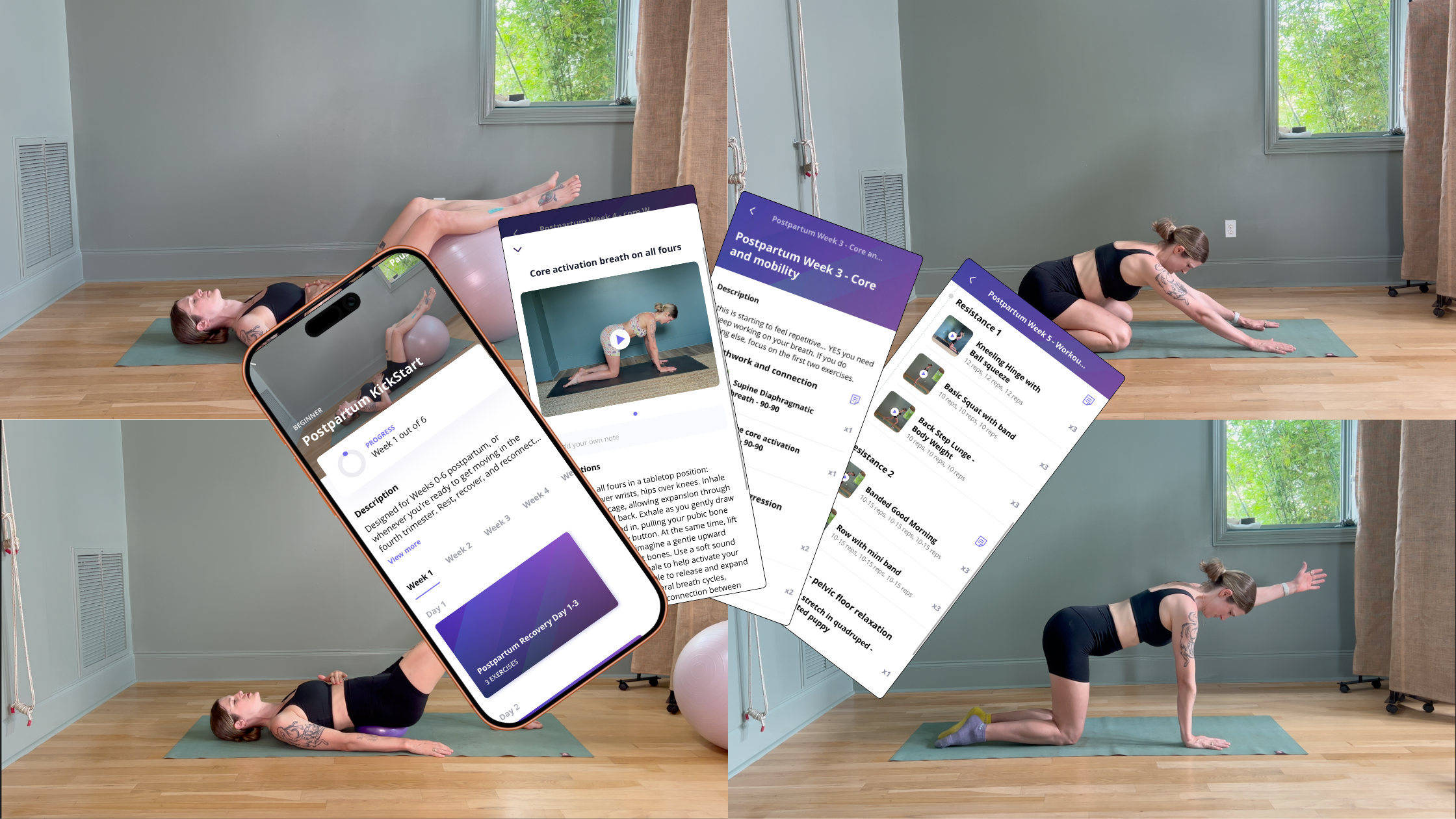
If you're craving a clear, structured plan to walk you through every stage of C-section recovery, I created something just for you.
Postpartum Kickstart is my 6-week, app-based program designed to help you:
Heal your core and pelvic floor after C-section
Safely rebuild strength, week by week
Feel supported and confident in your body again
I built this program because I've been there — a postpartum mama trying to navigate newborn life while wanting to feel like myself again. As one mama to another, I get it. And I've got you.
Safe to start before 6 weeks postpartum
Includes specific guidance for C-section recovery
Walks you step-by-step through the exercises in this blog (and so much more)
👉 Start Postpartum Kickstart here
Looking for Individual Support?

Hi! I'm Dr. Jackie Roelofs — a doctor of physical therapy specializing in the pelvic floor in pregnancy, postpartum, and beyond. My C-section recovery programs are available in person in New Orleans, and worldwide through my fully digital postpartum programs.
If you're craving 1:1 support after your C-section, fill out a contact form and I'll reach out to you within 2 business days.
If you're within the first 6 weeks postpartum, my E-Book Rest, Breathe, Begin: A Postpartum Recovery Guide is the perfect place to start. It includes thorough guidance on early postpartum recovery, with exercises you can do from your own bed to reconnect to your core, reduce pain, and kickstart your recovery.
And when you're ready to keep moving, Postpartum Kickstart takes you from your first day home with baby through your 6-week checkup and beyond.
Next on Your Reading List
Pelvic Floor Therapy After C-Section — the key to recovering from pain, healing your core, and getting back to exercising
Exercises to Fix Diastasis Recti — a pelvic floor PT's guide for postpartum healing
Postpartum Workout Gear Every Mom Needs — the 6 essentials I recommend for easing back into movement
If you want to stay connected, make sure to follow me on Instagram @drjuicyjackie for more expert (and no-TMI) postpartum advice.
You've got this, mama. HEAL, MOVE, AND THRIVE.
