
Exercises to Fix Diastasis Recti: A Pelvic Floor PT’s Guide for Postpartum Healing
Hey there! My name is Jackie and I’m a pelvic floor physical therapist and postpartum specialist in New Orleans, and I help active women feel good in their bodies through every stage of motherhood.
In today’s blog, I’m walking you through the best exercises to fix diastasis recti—a condition that impacts so many women during pregnancy and postpartum.
If you’ve landed here, you might be wondering:
Do I have diastasis recti?
Will my diastasis ever go away?
How can I fix diastasis recti without surgery?
Whether you’re 6 days, 6 weeks, or 6 months postpartum, diastasis can affect your strength, confidence, and overall recovery. My goal, as a pelvic floor physical therapist, is to take away some of the fear and give you a clear, supportive path forward.
The good news? There is so much you can do to support postpartum healing—and the right exercises to fix diastasis recti can make a huge difference when you approach it from a whole-body perspective.
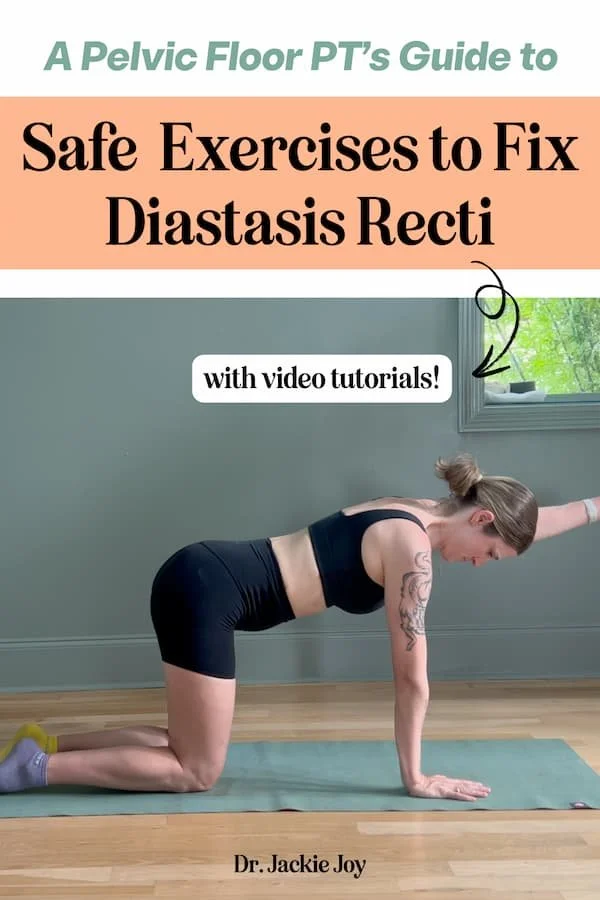
Pin me for later ⤵️
What Is Diastasis Recti?
Diastasis recti (also called diastasis rectus abdominis) is a separation of the abdominal muscles caused by the stretching of the linea alba.
The linea alba is the connective tissue that joins your abdominal muscles, including:
Transversus abdominis
Internal obliques
External obliques
Rectus abdominis
The rectus abdominis is the long muscle that runs from your ribcage to your pubic bone (often known as the “six-pack” muscle).
During pregnancy, your abdomen naturally stretches to make room for your growing baby.
In fact, research shows that 60–100% of women experience some level of diastasis recti by the third trimester.
Let me say this clearly:
This is normal.
Your body did exactly what it needed to do.
You did nothing wrong.
How Long Does It Take to Heal Diastasis Recti?
For some women, diastasis recti improves on its own over time.
However, many women benefit from intentional postpartum support and targeted exercises, especially if the separation is more than 2–3 finger widths.
Working with a pelvic floor physical therapist can help you:
Understand your specific core function
Identify contributing factors
Build a personalized recovery plan
If you’re feeling unsure about your postpartum healing, this is such a valuable next step.
The Best Exercises to Fix Diastasis Recti Start With Your Foundation
The best exercises to fix diastasis recti will vary depending on your stage of postpartum recovery—but everyone should begin with the same foundation:
Breathwork and core connection
Your core is more than just your abs. It’s a system that includes:
Your diaphragm
Your pelvic floor
Your abdominal muscles
Deep spinal stabilizers
Before jumping into more advanced postpartum exercises, we want to reconnect this entire system.
If you’re in the first 0–12 weeks postpartum, this is the most important place to start.
Follow along with this core breathing exercise for diastasis recti ⤵️
Before you begin, think of this as gently reconnecting—not forcing or pushing.
Gentle Exercises to Fix Diastasis Recti (Before 6 Weeks Postpartum)
If you’re under 6 weeks postpartum, focus on gentle, controlled core activation. These exercises help rebuild connection without adding unnecessary strain.
Supine Heel Slides
A simple but powerful movement to activate your deep core while maintaining alignment.
Lie on your back with your knees bent.
Inhale to prepare, expanding into your ribs, pelvic floor, and belly. Exhale and say “sh” as you slide one heel at a time down to straighten your leg and bring it back to the start position.
Alternate legs for the prescribed reps.
Tips: make sure the stationary leg is grounding into the floor. Imagine driving your foot and heel into the floor as you lift the opposite leg.
Supine Marches
This builds on heel slides by adding a stability challenge while keeping the movement slow and intentional.
Lie on your back with your knees bent.
Inhale to prepare, expanding into your ribs, pelvic floor, and belly.
Exhale and say “sh” as you lift one knee at a time in a marching motion.
Keep your knees bent at approximately a 90° angle the whole way through.
While lifting one leg, make sure the stationary leg is grounding into the floor. Imagine driving your foot and heel into the floor as you lift the opposite leg.
If you’re looking for additional exercises that are safe to begin before 6 weeks postpartum, make sure to check out this blog with video demonstrations!
More Advanced Exercises to Fix Diastasis Recti
As your strength improves, you can begin incorporating more dynamic movements.
Exercises on your hands and knees are especially effective because they naturally encourage deep core activation and coordination.
Quadruped Hover (with Pilates Ball)
This exercise challenges your stability while activating your entire core system.
Place a Pilates ball between your knees and get on all fours.
Inhale to prepare and then exhale as you lift your knees up one to two inches off the floor.
Hold for 5 to 10 seconds then release back down
Repeat - inhale to prepare and exhale lift as you squeeze the ball between your knees.
Bird Dog (or Modified Bird Dog)
A foundational movement for building strength, balance, and coordination.
Start on all fours.
Lift one arm forward, reaching it in front of you.
At the same time, slide and lift the opposite leg, lengthening your heel towards the wall behind you.
The emphasis is on reaching your arm forward and your leg back, not on how high you can lift them.
Fire Hydrants
Great for integrating core stability with hip strength.
On All fours, inhale to prepare.
Exhale as you lift one knee out to the side and slightly backward, no higher than hip height.
Lower back down to the start and repeat.
Tips: keep your belly button facing the ground, you should not be rotating through the spine or pelvis, only lifting that knee to the side. Drive the knee of your stationary leg into the floor/mat to increase pelvic stability and glut engagement.
A Gentle Reminder About Healing Diastasis Recti
If there is one thing I want you to remember mama, it’s that healing diastasis recti isn’t about rushing or “fixing” your body quickly.
It’s about:
Rebuilding connection
Supporting your core system
Progressing in a way that feels safe and sustainable
You can get stronger.You can feel supported in your body again.
Ready for a Step-by-Step Plan?
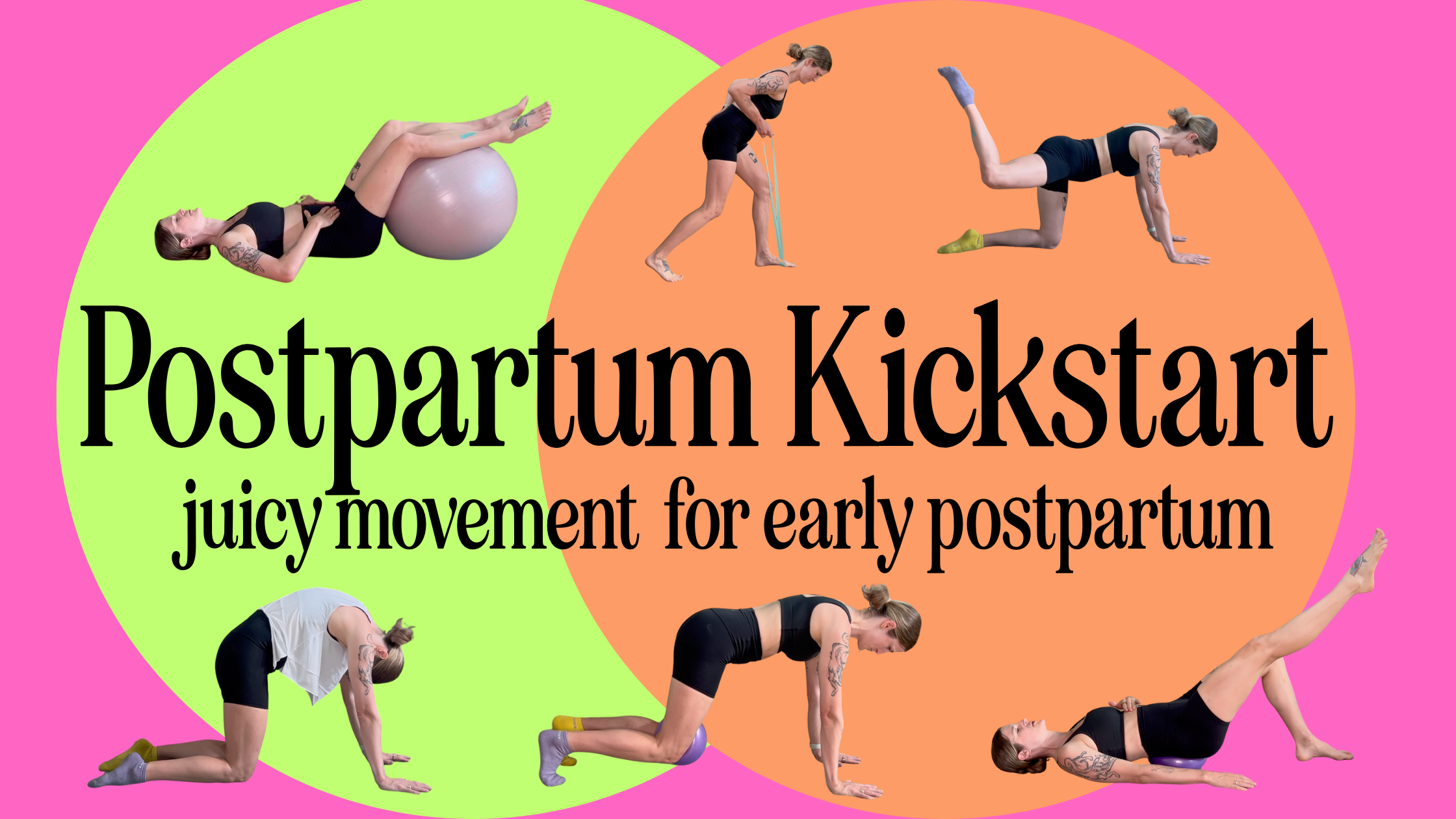
If you’re ready to go deeper, I created something just for you.
Postpartum Kickstart is my 6-week, app-based program designed to help you:
Heal your core and pelvic floor
Safely rebuild strength
Support your body in the early postpartum phase
I have been where you are. A postpartum mama who is navigating newborn life, while wanting to feel like myself again. As one mama to another, I know what it’s like to feel “out of place” in your body. This program is designed with real mamas and their real lives in mind.
It’s safe to start before 6 weeks postpartum
Includes guidance for C-section recovery, prolapse, and more
Walks you step-by-step through the exact exercises to fix diastasis recti
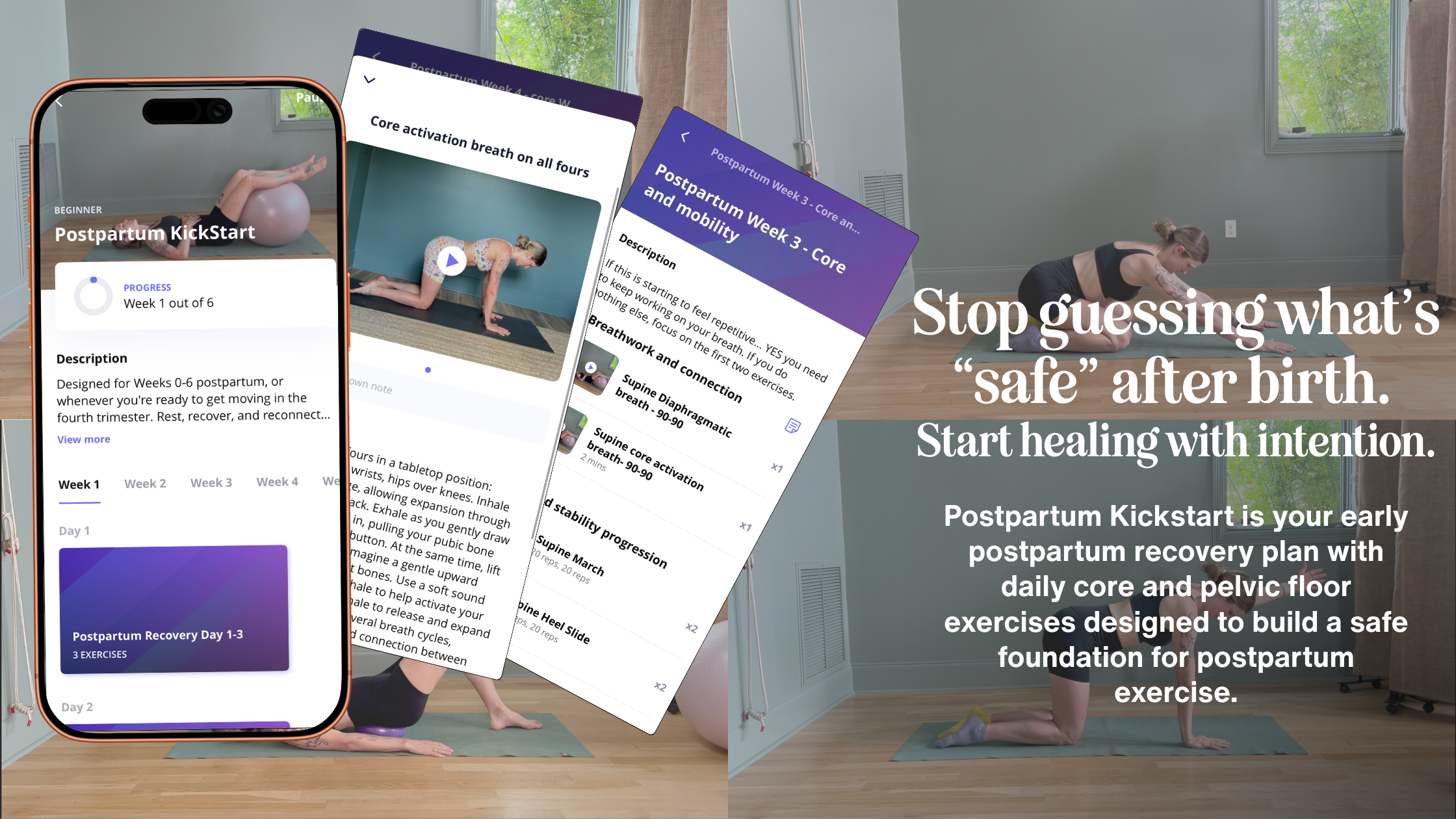
If you’re craving a clear, structured plan…
👉 Postpartum Kickstart is your next step
Looking for Individual Support?
Hi! I’m Dr. Jackie Roelofs
- a doctor of physical therapy specializing in the pelvic floor in pregnancy, postpartum and beyond. My postpartum recovery programs are available in person in New Orleans, and worldwide through my fully digital postpartum programs.
If you are craving support after undergoing one of the biggest transformations of your life, fill out a contact form and I’ll reach out to you within 2 business days Scheduling a 1:1 postpartum pelvic floor consultation.
If you just had a baby - whether vaginally or by C-section- make sure you check out my E-Book, Rest, Breathe, Begin: a postpartum recovery guide for those first few weeks at home with baby. It includes thorough guidance on early postpartum recovery, with exercises you can do from your own bed to reconnect to your core, reduce pain, and kickstart your recovery and return to exercise after C-section.
And when you’re ready, get moving with Postpartum Kickstart - my comprehensive 6 week program that takes you from your first day home with baby too your 6 week checkup.
Next on Your Reading List:
Pelvic Floor Therapy After C-Section: the key to recovering from pain, healing your core, and getting back to exercising
Postpartum Workout Equipment Every New Mom Needs- the ultimate guide to essential postpartum workout gear for at home or on the go
Preparing for Postpartum - a Pelvic Floor Physical Therapist’s postpartum essentials checklist
If you want to stay connected, make sure to Follow me on Instagram for more expert (and no-TMI) postpartum advice.
