
Pelvic Pain During Pregnancy in the First Trimester: Why It Happens and What Actually Helps
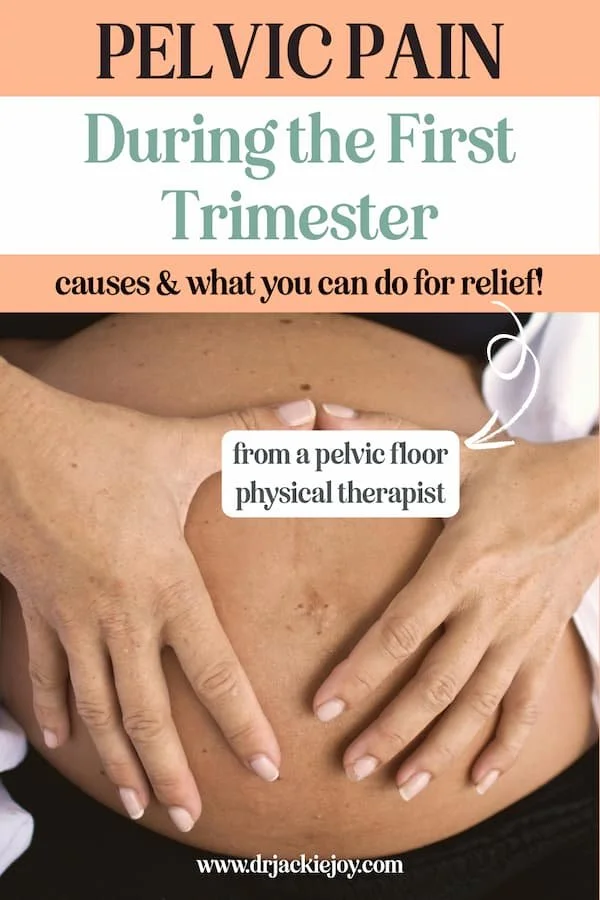
If you're noticing pelvic pain during pregnancy in the first trimester, you might be wondering, "Wait — isn't this supposed to happen later?" It feels early, I know. But pelvic discomfort in early pregnancy is incredibly common, and there is plenty you can do about it.
Most people assume the "pregnant waddle" and the pelvic pain women talk about in pregnancy is caused by a growing belly. The truth is, it's much more nuanced than that. While a bigger belly definitely contributes later on, pelvic pain in the first trimester usually has nothing to do with size and everything to do with what's happening on the inside.
Let's walk through what's actually causing your symptoms, the most common types of pelvic pain in early pregnancy, and what you can do to feel more comfortable so you can actually enjoy this time.
Pin me for Later ⤵️
What Causes Pelvic Pain During Pregnancy in the First Trimester?
Pelvic pain in early pregnancy is rarely caused by just one thing. It's usually a combination of:
The cascade of pregnancy hormones flooding your system
Increased mobility in the pelvis
Tightness in your pelvic floor and hip muscles
Your baseline mobility and strength heading into pregnancy
How well your pelvic floor, deep core, and hip muscles work together
Here's a closer look at each one.
Pregnancy Hormones (Especially Relaxin)
The moment you become pregnant, your body launches into a massive hormonal shift to support your growing baby — and it happens fast.
You've probably heard of hCG, the hormone a pregnancy test detects. In early pregnancy, hCG levels roughly double every 48 to 72 hours. But the hormone really driving pelvic pain in the first trimester is one called relaxin.
Relaxin does exactly what it sounds like. It relaxes your ligaments! Ligaments are the strong bands of connective tissue that hold your joints together. Relaxin acts on ligaments throughout your body, but especially in the pelvis, signaling that one day soon (I know, nine months can feel like forever), your pelvis will need to open to deliver your baby.
The result? Your pelvic joints become a little more mobile and stretchy. That is actually a beautiful and necessary part of pregnancy. The challenge is that your body has to learn how to compensate for that extra mobility — and if it can't yet, that is often when pain shows up.
Why Extra Pelvic Mobility Can Cause Pain
Different joints in your body are designed for different jobs. Your shoulder is built to move in nearly every direction. Your knee is built to bend and straighten. Your pelvis, on the other hand, is designed to be stable. It needs to sit sturdily under the weight of your trunk and upper body and provide a solid foundation for the smooth, coordinated movement of your legs and lower body.
Your pelvis stays stable thanks to its strong, taut ligaments. But once relaxin enters the picture, those ligaments soften slightly. Your pelvis becomes less stable and more mobile.
Mobility on its own isn't a bad thing. But when there is too much mobility — what we call hypermobility — certain areas of your pelvis can become irritated, inflamed, and ultimately painful.
Joint Hypermobility (and Why It Matters Even More in Pregnancy)
Some women come into pregnancy with naturally hypermobile joints. You might be hypermobile if:
You've been called "double jointed"
You were a dancer, gymnast, or cheerleader growing up
You describe yourself as "really flexible"
You can bend forward and easily palm the floor
If that sounds like you, you are not alone — and you are certainly not doomed to have pain. It just means we want to be especially thoughtful about how you move and strengthen your body during pregnancy.
For some hypermobile women, pregnancy is the straw that breaks the camel's back. Pain shows up in their pelvis, hips, or back for the first time ever. For others, pregnancy makes pain they have already had even more pronounced. Either way, hypermobility is something worth keeping in mind so you can build a plan that supports rather than aggravates your body.
(For what it's worth — I'm hypermobile too. A pain-free, active pregnancy is absolutely possible.)
Your Baseline Strength and Pelvic Floor Function
Your pelvis doesn't function in isolation. It's deeply connected to your pelvic floor, deep core, glutes, and hips. When those muscles are strong, balanced, and working together well, your pelvis has the support it needs — even when relaxin is doing its thing.
When those muscles are weak, overly tight, or uncoordinated, your pelvis loses some of its support system. That's often when pelvic discomfort shows up — sometimes as early as 4, 5, or 6 weeks pregnant.
The Most Common Types of Pelvic Pain in Early Pregnancy
Pelvic pain isn't one single thing. It can show up in different spots and feel very different depending on which joint or area is irritated. Here are the three most common.
Pubic Symphysis Pain (SPD)
Your pubic symphysis is the joint where your two pubic bones come together at the front of your pelvis. When this joint becomes irritated and painful in pregnancy, it's often called symphysis pubis dysfunction, or SPD.
Pubic symphysis pain can feel like:
Pain directly over the pubic bone
A sharp, shooting pain in the lower abdomen or into the vagina
A weird "off" sensation in your legs, like your body feels out of alignment when you walk
Pain when rolling over in bed, getting in and out of the car, or going up stairs
Sacroiliac (SI) Joint Pain
Your SI joints sit on either side of your sacrum — that triangular bone at the base of your spine — and connect it to the wing-shaped ilium bones that form the sides of your pelvis. These joints are an extremely common source of low back and pelvic pain in pregnancy.
SI joint pain is often described as:
A pulling sensation in the low back
Tightness deep in the back of the hip
Pain that radiates down the leg (sometimes called sciatica, though it may or may not actually involve the sciatic nerve)
Tailbone Pain (Coccydynia)
Your tailbone, or coccyx, is the small bone at the very bottom of your spine. When it becomes painful, it's called coccydynia.
Tailbone pain might feel like:
Pain when sitting, especially on hard surfaces
A nagging tightness at the bottom of your spine
Increased discomfort if you've had a previous fall on your tailbone
Tailbone pain in pregnancy is often connected to overclenching of the glutes and an overly tight pelvic floor (both very treatable).
You might be experiencing pain in just one of these areas, or in all three. Either way, knowing what you're dealing with helps you address it the right way.
When to Talk to Your Provider About Sharp Pelvic Pain
Most pelvic pain during pregnancy in the first trimester is musculoskeletal and very manageable. But there are times when pelvic pain warrants a quick check-in with your OB or midwife. Reach out to your provider if you experience:
Sharp pelvic pain that's severe, sudden, or one-sided
Pelvic pain along with bleeding
Pain accompanied by dizziness, fever, or shoulder pain
Cramping that feels significantly more intense than typical period cramps
This is exactly the kind of thing your medical team is there for. When in doubt, ask. Most of the time, your symptoms will turn out to be the very common, very treatable kind we've been talking about — but it's always okay to check!
How to Prevent Pelvic Pain in Pregnancy
A lot of women ask if there's anything they can do to keep pelvic pain from showing up in the first place. The answer is yes — and the best results often come from things you do before and during early pregnancy:
Strength training before and throughout pregnancy
A consistent, well-rounded fitness routine before conception
Stability work for the pelvis, deep core, and hips
A healthy, well-functioning pelvic floor (and no, this isn't just about doing your kegels)
If you're hypermobile or have had pelvic pain before, these proactive steps matter even more. The goal isn't to do more — it's to do the right things for your body.
What to Do About Pelvic Pain in the First Trimester
If you're already dealing with pelvic pain, the good news is there's a lot you can do to feel better. Here's where to start.
See a Pelvic Floor Physical Therapist
A pelvic floor physical therapist is the gold standard for evaluating and treating pelvic pain in pregnancy. We can assess what's actually happening with your pelvic floor, deep core, and hips, then build a plan tailored specifically to you.
If you're in the New Orleans area, I'd love to see you in person. If you're not local, I also offer virtual sessions, so you can get expert support from anywhere.
You can fill out a contact form here!
Add Stability Exercises to Your Routine
Stability work is one of the most underrated tools for managing pelvic pain in pregnancy. The right pelvic floor exercises can help your pelvis feel more supported, even with the added mobility from relaxin.
Strength Train With Guidance
Yes, you can absolutely strength train during pregnancy — and in many cases, you should. Strength training helps build the muscular support your pelvis needs to handle hormonal shifts and your changing body. If you're new to lifting or unsure where to start, working with a pelvic floor PT can help you do it safely and confidently.
You Are Not Alone — and You Don't Have to Just Put Up With It
Pelvic pain during pregnancy in the first trimester is incredibly common, but it isn't something you simply have to grin and bear for the next nine months. With the right support, you can absolutely feel strong, capable, and comfortable in your body throughout your entire pregnancy.
Looking for Individual Support?

Hi! I'm Dr. Jackie Roelofs — a doctor of physical therapy specializing in the pelvic floor in pregnancy, postpartum, and beyond. My empowered pain-free pregnancy programs are available in person in New Orleans, and worldwide through my fully digital postpartum programs.
If you're craving 1:1 support during pregnancy, fill out acontact form and I'll reach out to you within 2 business days.
Next on Your Reading List
The Best Exercises to Prepare for Labor: A Pelvic Floor Physical Therapist's Favorites— simple pelvic floor friendly exercises that you can do at home
SPD in Pregnancy: 3 of The Best Exercises to Help — a pelvic floor PT's guide for supporting symphysis pubis dysfunction in pregnancy
Safe Exercises for the First Trimester — safe stability and strength training exercises for the first trimester of pregnancy
If you want to stay connected, make sure to follow me on Instagram@drjuicyjackie for more expert (and no-TMI) postpartum advice.
You've got this — and your body is so much more capable than you've been told.
